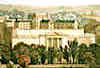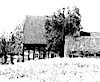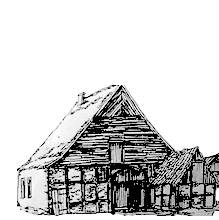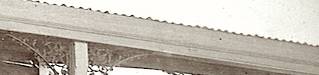
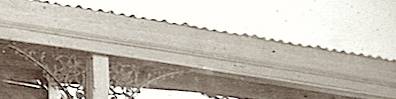
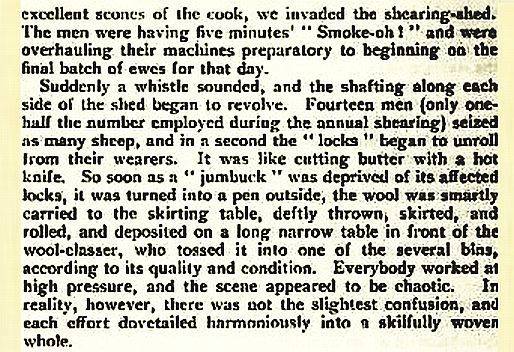
Below: Walter Kilroy Harris (in his book "Outback in Australia", Newcastle, NSW, Australia, 1919) about Bringagee (Chapter 12b, Illililawa to Bringagee)
born on 28 April 1879 in Melbourne, Australia
died on 5 August 1945 in Haverthwaite, England
died on 5 August 1945 in Haverthwaite, England


Grace Robertson
© Kurt Müller 2014


Homepage auf
Deutsch
Deutsch


Homepage in
English
English
Homepage
Grace Robertson
Grace Robertson

.jpg)



And in 1872 the following report appeared in the
Town & Country Journal:
'
A Tour to the South
' was a series of articles written by an anonymous correspondent
Benerembah has an area of 140,000 acres, and a frontage of nine miles to the Murrumbidgee.The run carries about 54,000 sheep.I have before had occasion to speak of the spirit and enterprise displayed by the large number of Victorian capitalists who have bought station property in Riverina during the past ten years.Mr. Baillie is another Victorian, and a few solid facts will speak for him in laudatory terms.The station has been in his hands about six years.There are now 150 miles of wire fencing erected, and the run is entirely enclosed, and subdivided into twelve large and seventeen smaller paddocks.To secure a sufficient supply of water, without which it would have been impossible to keep stock on the station except on the river frontage, three dams, one of immense size, and four wells have been constructed, and the books show the improvements on the station during the past six years to have cost £15,000.These are remarkable facts, as showing how the resources of Riverina are being developed.
Thanking Mr. Munro for his hospitality and assistance, I proceed on my journey “own the river.” canter over the plains for six miles brought me into some splendid salt-bush country, and then I found myself at Bringagee, the beginning of the leviathan station of Groongal, the property of Mr. Thomas Learmonth, of Ercildoun.
The name of Mr. Thomas Learmonth of Ercildoun, is a household word among the sheep-farmers and squatters of Victoria and Riverina.Mr. Learmonth is the Bayley of Victoria, and divides the honours in Riverina with the latter gentleman.The Riverina station is an immense one, and is carried on in conjunction with Ercildoun by Mr. Learmonth.The flocks and herds occupy different parts of the run. That part higher up the Murrumbidgee is called Bringagee, and is a cattle station. Sheep are run on the lower parts of the river, and back blocks. The top, or cattle station, Bringagee, is under the charge of Mr. John Buckley. The paddocks, enclosed by first- class post and rail fences, contain splendid salt bush, some of the best that I have seen on the river.The cattle are a fine breed –all Durhams from imported stock, and among their ancestors were Royal Charley, Sir Robert Clan Campbell, and other well- known names.The number on the run varies from 2000 to 6000 head; about 3000 head are now on Bringagee.
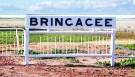
Bringagee, now a parish in
Sturt County
,
Carrathool Shire
, in the
Riverina
area of New South Wales, Australia, probably one of the least significant places imaginable, once seems to have been of considerable importance for the people living along the
Murrumbidgee river
at the end of the 19th century.
It was, different from the other places, not a sheep but a cattle station (owned by Thomas Livingstone-Learmonth, of Parkhall, Stirlingshire, Scotland) and, moreover, it provided a railway station, on the
Hay line
, connecting Junee and Hay, opened in 1882, closed down in 1985. For the Robertsons and the other people of
Toganmain
, Bringagee was only a few miles down the
Murrumbidgee river
and one of their two closest railway stations.
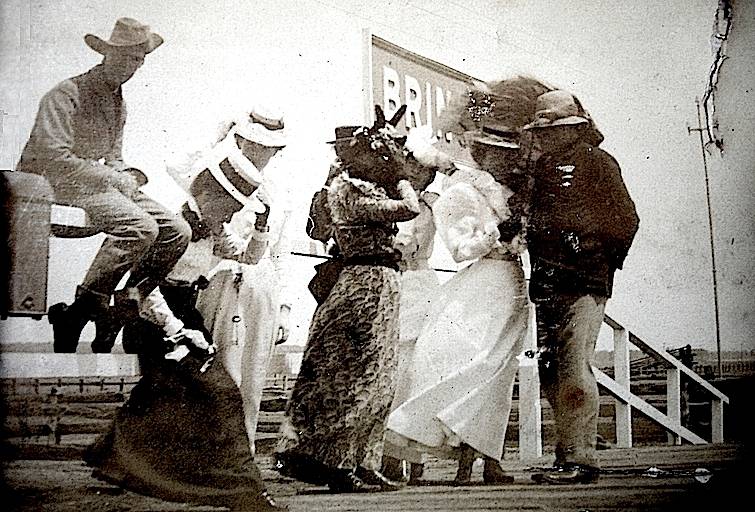
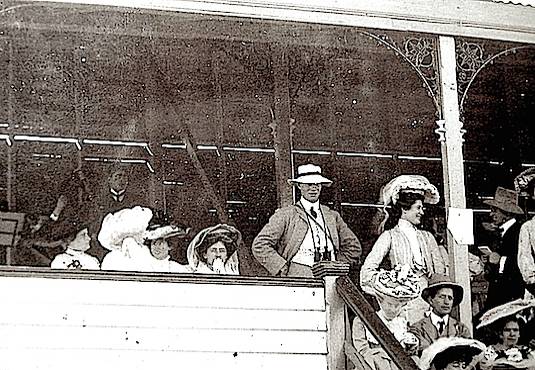
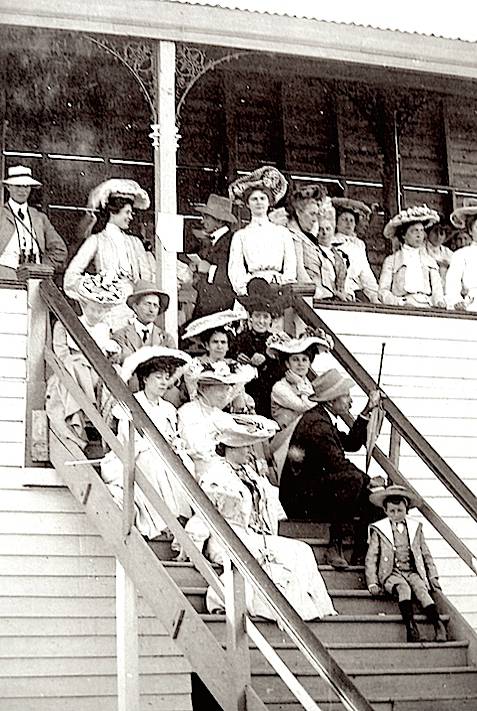
Bringagee also provided a telegraph office and the switchboard for the local telephone connections. But the probably most spectacular attraction Bringagee had to offer were its horse race meetings, probably a kind of
picnic horse races
, typical for Southern Australia (read also
here
and
bottom
of this page).
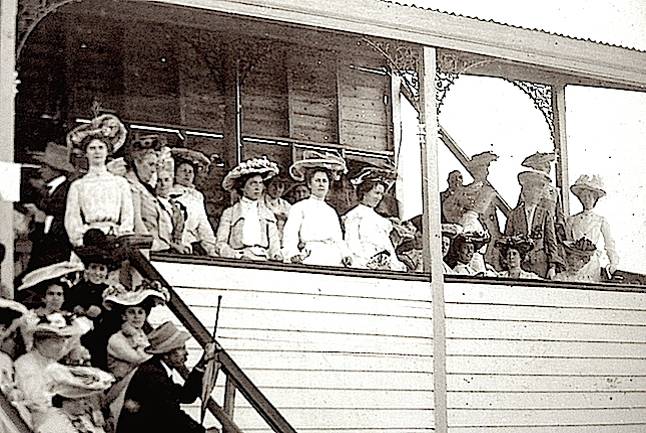
Right and above:
some of these persons on the grandstand might belong to the Robertson family.
Below: notice in the Sydney Morning Herald on 28th November 1890 about registering the race meetings. The "
A. J. C.
" is the "Australian Jockey Club". Australia's first organised race meeting was held in 1810. In 1840 the Australian Racing Committee was formed to establish a formalized racing authority. By 1842 this Committee had resolved itself into the Australian Jockey Club.


Below: Toganmain between the railway stations of Groongal and
Bringagee


Right and below:
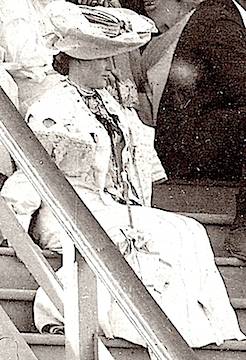
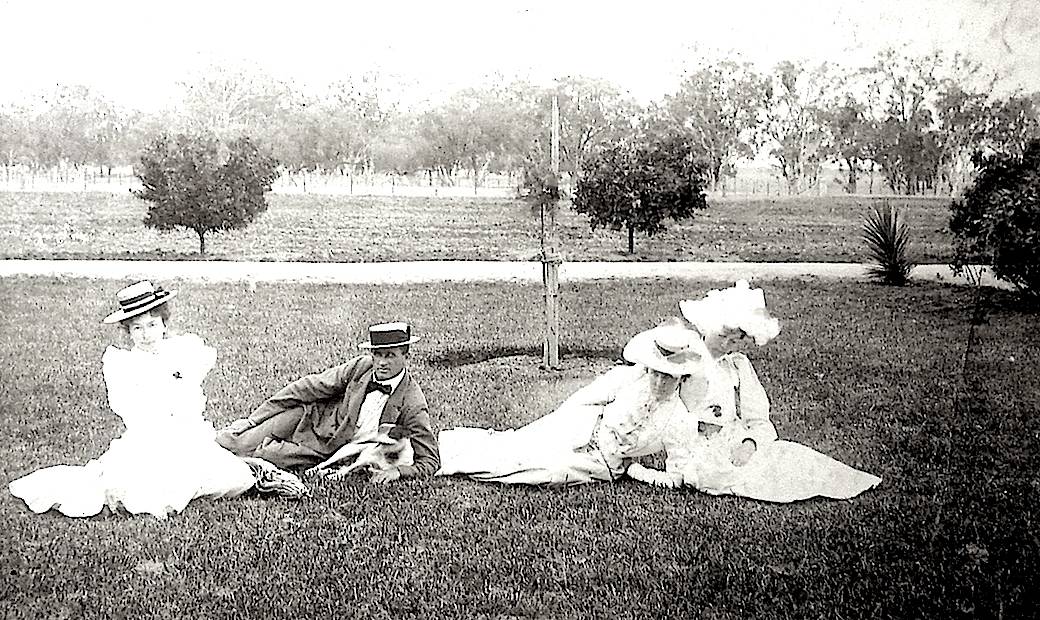
who are they?
The lady in the more recumbent position
strongly reminds of
Margaret Robertson.
Diese Seite auf
Deutsch
Deutsch
Family history Müller - Humphreys
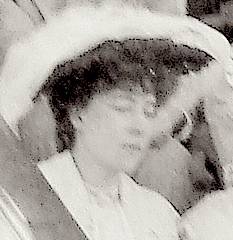
This lady might possibly be Anne Robertson
Is she Margaret Robertson ?
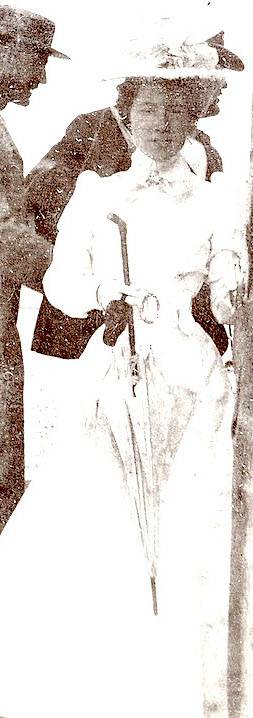
Right:
And is this lady Grace Robertson, indeed?


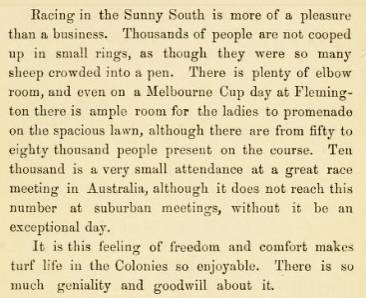
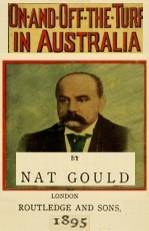
In his book "The Roar of the Ring" (London 1900)
Nat Gould writes about picnic races:


Menu